

This article is the sixth in a series on modern folk beliefs. In the series so far:
Anti-Essentialism
Every society has its folk beliefs: sayings and stories about the world that are widely held yet not grounded in fact. Traditionally, these were things like a saying about health or wealth from your grandmother, or an old proverb of forgotten origin. But from the mid 20th century, ideas originating from academia or political activism, transmitted by mass media and mass education, came to be ever more influential in determining mainstream culture. This has given rise to what I have come to think of as modern folk beliefs; simplistic, muddled and often moralistic versions of the original ideas that have become widely held among large segments of society.
I started off this series by titling it ‘folk beliefs of the upper normie’. As the introduction to the first article goes into in more detail, ‘upper normie’ describes someone who is intelligent enough and sufficiently plugged into highbrow discourse to have imbibed its ideas successfully, but who is too conventionally minded to really question them. This term describes those most likely to hold the beliefs described in the first three articles well, but I subsequently broadened the concept to ‘modern folk beliefs’ as I think that the beliefs about climate change and family structure in the more recent articles are not restricted to this group. Also, I was sick of typing ‘upper normie’. The subject of this article though, anti-essentialism, definitely counts as an upper normie folk belief.
So what do I mean by anti-essentialism? I mean the belief that social outcomes are not determined by inherent, essential qualities of people or groups, but by structural forces acting upon them. Most obviously anti-essentialism denies human nature. It denies inherent human tendencies like tribalism, and inherent differences between people and groups. But anti-essentialism goes further than merely denying biological reality; it often denies the existence even of inherent cultural differences, or of any group tendencies that might come close to being a stereotype. Therefore anti-essentialism is a broad concept encompassing both the blank slate view of human nature and social constructionism in general.
You can see the anti-essentialist worldview in many commonly-expressed beliefs. One example is the belief that racism and crime are solely caused by poverty, as Zack Polanski claimed last year (“antagonism towards migrants comes from poverty”). Other examples I’ve encountered frequently over the years include the belief that sex differences are entirely down to societal expectations, that IQ tests only measure how good someone is at doing IQ tests, that race is purely a social construct, and that stereotypes are always false.
Anti-essentialism has a characteristic vernacular; where possible it tries to replace active or descriptive terms with the passive voice, in order to imply some outside force at work. Example terms include ‘minoritised’, ‘racialised’, ‘oppressed’, ‘marginalised’, ‘criminalised’, ‘gendered’, ‘socialised’, ‘unhoused’, ‘disenfranchised’, ‘undocumented’, and ‘assigned (male at birth)’. Readers will have doubtless observed how this language has crept into officialese in the last few years.
A key feature of how anti-essentialism is employed politically is that it is employed selectively. Essentialist definitions of things like whiteness, Englishness, or masculinity come under the most sustained deconstructive efforts, while other, favoured identities are reinforced. An example of this is the phenomenon of asymmetrical multiculturalism; the peak-woke era saw Blackness elevated to an essential characteristic with a capital B, while attacks on small-w whiteness, conceptualised as merely an artificial creation of power, intensified.
While it elevates favoured identities, anti-essentialism also denies them agency. The structural forces that are deemed to determine things only ever seem to emanate from categories like the Western world, or men. Green MP Hannah Spencer gave a good example of this during her by-election campaign, responding to Matt Goodwin’s question about why terror attacks like the Manchester Arena bombing happened, with “because people like you are dividing people”, before swiftly trying to backtrack.
Anti-essentialism lies behind many of the beliefs I’ve discussed in previous articles. The claim that nations and peoples are merely artificial creations driven by the needs of modern states, as I went into in two earlier articles in this series, is an anti-essentialist one. So is the ‘developmentalist view’ of modern family structure that ignores the deep history of how much marriage and family norms differed around the world. So, partly, is the view that Europe was a backwater before colonialism, only developing subsequently due to the benefits it extracted from the rest of the world. The failure of British authorities to recognise the ethnic factor behind grooming gangs was influenced by anti-essentialism, as is the widespread view that cultural differences mean nothing more than food and music.
The purpose of this article is to provide an intellectual history of how anti-essentialism achieved the status of ‘common sense’, beginning with the banishment of biology from social science, and later with the rise of social constructionism and the discrediting of cultural essentialism. My own position on the essentialism question is that it’s true that specific essentialist explanations of human behaviour can be false or oversimplified, such as the strict demarcation of racial difference which characterised some 19th century thought. To this, anti-essentialism can provide a necessary corrective. But any attempt at an accurate assessment of human behaviour requires looking at the biological, the cultural, and the socially constructed together. Rigid anti-essentialist worldviews remove the biological, and often even the cultural, from the equation, and thus fail at the most basic level.
The declining role of biology in social science in the early 20th century
Traditional European thought assigned an important position to essential attributes, be it Plato’s forms, Aristotle’s substances, or Christianity’s Imago Dei. The origins of modern anti-essentialism lie in the enlightenment, and in early liberalism and socialism. John Locke is often cited as an early exponent, describing the human mind as “white paper, void of all characters, without any ideas” in his An Essay Concerning Human Understanding of 1689. Karl Marx wrote in his Theses on Feuerbach (1845) that “[t]he human essence is no abstraction inherent in each single individual. In its reality it is the ensemble of social relations.” John Stuart Mill wrote that “[w]hat is now called the nature of women is an eminently artificial thing” in The Subjection of Women (1869).
However anti-essentialism did not dominate either elite or mass opinion before the 20th century, and by the late 19th century the intellectual climate had become particularly essentialist. Intellectually this climate was strongly influenced by the new Darwinian sciences of heredity, while materially it was influenced by the yawning gap in capabilities and wealth that had opened up between Europeans and North Americans and the rest of the world.
This was the intellectual world that the modern anti-essentialist worldview still defines itself against, citing the original sins of essentialism; scientific racism, eugenics, and IQ determinism. But scholars at the time were not simple biological determinists; American sociologists “more or less viewed race as a contributory but not necessarily as the primary explanation for human behavior” (Degler 1991: 16). As an example, see the views of leading American sociologist Edward A. Ross in 1901:
“In a speech in 1901 before an audience of social scientists, Ross noted that there were two ways to account for differences between groups of people. “There is the equality fallacy inherited from the early thought of the last [eighteenth] century, which belittles race differences and has a robust faith in the power of intercourse and school instruction to lift up a backward folk to the level of the best.” The counter-fallacy, which he saw growing up “since Darwin,” “exaggerates the race factor and regards the actual differences of people as hereditary and fixed.” He told his audience that at the present time “the more besetting fallacy” was that of race. For race was “the watchword of the vulgar,” and therefore social scientists ought to be wary of it.” (Degler 1991: 18)
Carl Degler’s book In Search of Human Nature: The Decline and Revival of Darwinism in American Social Thought (1991) provides a good overview of the rise to dominance of anti-(biological)-essentialism in the American context from the early 20th century onwards. The American context is of course not the only one that matters, but given how the liberal American worldview spread over the entire Western world over the 20th century, it’s probably the most important one.
There are many characters in this story, but Degler identifies Franz Boas as the first and most influential. Boas, most famously in his The Mind of Primitive Man (1911), first established the idea that, contrary to existing mainstream social science, all human differences could be explained by culture, and that no people or culture could be judged as superior to any other (i.e. cultural relativism). In the next few decades, Boas’s ideas would spread widely over social science. Subsequent important figures included Boas’s student Alfred Kroeber, who proclaimed the necessity of the total separation of social science from biology (Degler 1991: 82-84), and Otto Klineberg, who aimed to rid psychology of the idea of race differences (his Race Differences, published in 1935, was dedicated to Boas).
Outside of the race question, there was growing opposition to earlier ideas that delinquency and criminality could be predicted from cognitive measurements, and to some extent of the validity of cognitive measurements at all (Degler 1991: ch. 6). Influential journalist Walter Lippman attacked the idea that IQ tests were meaningful measures of intelligence in a series of articles in 1922. His book Public Opinion of that year was also the first to attack the idea of stereotypes, coining the term in its modern usage.
As the early decades of the 20th century progressed, biology lost its explanatory role within the social sciences. The narrative told today is that this was purely a matter of better science discrediting pseudoscientific theories that had been motivated by racism. But Degler found that there was actually little new scientific work involved in the shift to the new paradigm:
“What the available evidence does seem to show is that ideology or a philosophical belief that the world could be a freer or more just place played a large part in the shift from biology to culture. Science, or at least certain scientific principles or innovative scholarship also played a role in the transformation, but only a limited one. The main impetus came from the wish to establish a social order in which innate and immutable forces of biology played no role in accounting for the behaviour of social groups.” (Degler 1991: viii)
The early 20th century was a time when many people believed strongly in the possibilities of egalitarian political and social change; anything that got in the way of this, including an essentialist view of humanity, had to be discarded. Many of the most influential thinkers were deeply personally committed to attacking any evidence of racial difference. Boas carried out a famous study in 1909 and 1910 intending to prove that rather than being biologically determined, skull shape was actually determined by the environment. On his motivations, Degler writes that “Boas’s professional correspondence similarly reveals that an important motive behind his famous head-measuring project in 1910 was his strong personal interest in keeping America diverse in population and open in opportunities for all.” (Degler 1991: 74). In 2002, anthropologists reanalysed Boas’s data and found no effect of environment on skull shape.
Another important factor was a change in the demographics of American academia. By the 1910s social scientists came increasingly from recent immigrant backgrounds, particularly Jewish, and were thus particularly motivated to counter criticisms of immigrant groups found in contemporary works like Madison Grant’s Passing of the Great Race or Carl Brigham’s Study of American Intelligence (Degler 1991: 200-201).
Therefore even before the rise of Nazism and the second world war, often cited as being what turned the West away from essentialist thinking, anti-essentialism was in the process of taking over. Nazi racial and social thinking did, however, harden taboos against essentialism, and provided even greater impetus to its opponents. This was most obvious in relation to race, for example see the UNESCO statements on race of the early 1950s, but was not limited to this. The postwar decades saw anti-essentialism moving beyond biology to a broader denial of the validity of the idea of essential attributes at all. This development is a huge topic but I’ll provide a few examples in the section below.
Broadening the scope of anti-essentialism after the second world war
An early example of this broadening was the attack on the idea of stereotypes, which, as I mentioned above, had first been attacked in the 1920s by Lippmann. During and after the war, a research team led by ex-Frankfurt school theorist Theodor Adorno produced The Authoritarian Personality (1950). This work was the culmination of a project to counter anti-semitism and fascism, and had a huge impact on social science in subsequent years, designating a whole swathe of character traits as pathological. One of the personality dimensions on the The F (Fascism) scale which they produced was the tendency to hold stereotypes. In this, and in Lippmann’s earlier writing, we can see the origins of the thought-terminating “that’s just a stereotype” response when someone identifies a pattern about a group. Though as more recent work like that of Lee Jussim shows, stereotype accuracy is one of the largest and most replicable effects in all of social psychology.
In criminology and psychology, Foucault’s Madness and Civilisation (1961) argued that madness was a construction of the age of reason, not an innate characteristic. He continued his approach in Discipline and Punish (1975) arguing that the idea of criminality was historically constructed through power relations. American sociologist Howard S. Becker’s Outsiders (1963) argued that ‘deviance’ was not something inherent but a ‘label’ that society gave to certain behaviour. You can see in works like these the origins of beliefs that crime can be explained entirely by social conditions, as well as the opposition to institutionalisation of the mentally ill even when they pose violent risks to others.
The specific term ‘social construction’ was popularised by The Social Construction of Reality (1966), written by sociologists Peter L. Berger and Thomas Luckmann, who argued that human behaviour is structured by the roles that we are socialised into. You often hear this idea in common ‘vulgar anti-essentialist’ statements about things like sex differences only existing because we are socialised into them.
In feminist theory, Simone de Beauvoir published The Second Sex in 1949, arguing that female nature is not natural but imposed by society; as she wrote “[o]ne is not born, but rather becomes, a woman”. The sex/gender distinction was reinforced in later works like Ann Oakley’s Sex, Gender and Society (1972). Judith Butler’s Gender Trouble (1990), went further, arguing that both sex and gender are socially constructed, and that the category of women itself was a problematic one, that could be ‘denaturalised’ by, for example, a drag show (Butler 1991: 175).
By the 1970s, the term ‘essentialism’ was used in academic debate to identify that which should be opposed. Edward Said’s Orientalism (1978) argued that European orientalists “adopt an essentialist conception of the countries, nations and peoples of the Orient under study” (Said 1978: 97). He claimed that European conceptions of the middle east were constructions intending to depict it as exotic and irrational in order to justify colonialism. This is the origin of the contemporary squeamishness about ‘exoticising’ non-Western cultures, even when identifying genuine cultural differences or performing valuable academic work. Actual orientalists, for example, did things like deciphering Egyptian hieroglyphics and excavating the ruins of Ur; more significant ultimately than exotic literature or paintings.
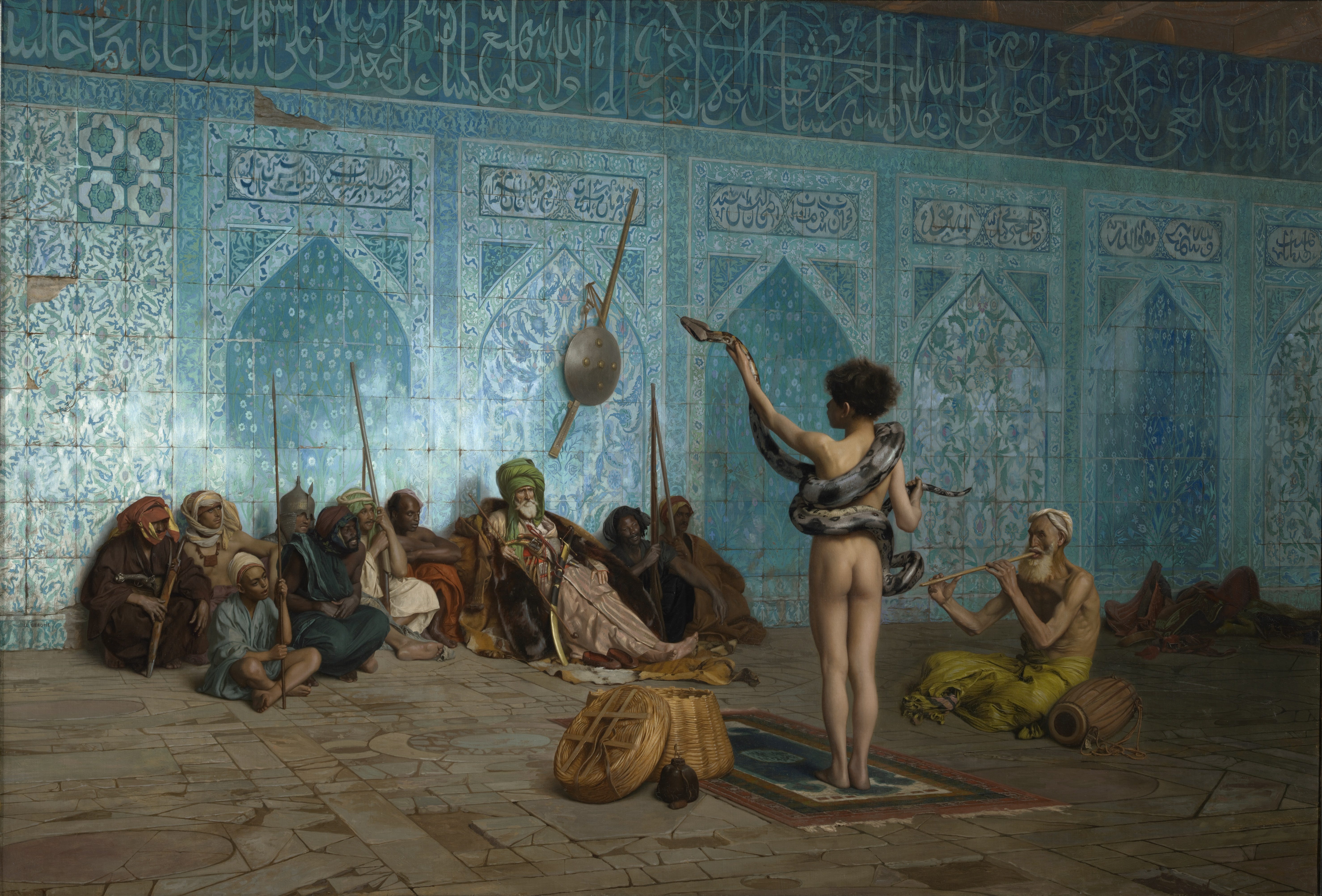
Étienne Balibar and Immanuel Wallerstein’s Race, Nation, Class (1991) argued that the idea that Western countries had particular cultures defined by being things like individualistic or enterprising was ‘cultural racism’, little different from the old biological racism (Balibar and Wallerstein 1991: 24-26). Ideas like this are widespread today; one consequence of the denial of Western cultural particularism is the idea that it is wrong to take cultural differences into account when determining immigration policy.
By the 1990s then, if not earlier, anti-essentialist ideas had become dominant across much of social science and the humanities and in mainstream media and education, prescribing the bounds of acceptable opinion. Thus they had also become dominant in the minds of people who grew up in this period, creating anti-essentialism as a modern folk belief.
Strategic essentialism
The tendency to explain everything in terms of power relations, social construction, and language caused a problem for those making anti-essentialist arguments. This was that anti-essentialism deconstructed the identity of the groups that they wanted to elevate. Cultural Studies pioneer Stuart Hall, for example, deconstructed an essentialist view of Caribbean identity in his Cultural Identity and Diaspora (1990). Foucault’s The History of Sexuality, published in the 1970s and 80s, argued that the category of homosexual was constructed, while deconstructing ideas of gender and sex was a major focus of much feminist theory. If all these identities were made up, on what basis could activists try and raise their status?
This problem was solved by strategic essentialism, an idea most associated with postcolonial theorist Gayatri Spivak. This justified mobilisation on the basis of an artificial, essential identity, like blackness, in order to overcome oppression. Activists, of course, do not usually require a coherent intellectual framework in order to be hypocritical, but strategic essentialism provided one when it was needed. Examples of strategic essentialism in practice include the attacks on whiteness and the elevation of blackness that we saw particularly in 2020, asymmetrical multiculturalism, and the oddly essentialist feature of trans ideology that you can have an essential gender identity that exists in the wrong body.
Pushbacks to anti-essentialism
Over the second half of the 20th century there were several attempts to challenge anti-essentialism, but none managed to overturn it. E. O. Wilson published Sociobiology: The New Synthesis in 1975, aiming to integrate evolutionary biology into the study of social behaviour of animals, and more controversially, of humans. This met with a hostile reception from sociologists and from some politically radical biologists, most famously from Stephen Jay Gould and Richard Lewontin, and social science remained anti-essentialist. A rare exception was the field of evolutionary psychology; important works included Donald Symons’ The Evolution of Human Sexuality (1979) and Leda Cosmides and John Tooby’s The Adapted Mind (1992), but evolutionary psychology never became integrated into social science as a whole.
When he was writing around 1990, Carl Degler thought that he was observing the beginnings of a return to using biology in the social sciences (Degler 1991: 327). Ten years later, Steven Pinker’s The Blank Slate (2002) was a bestselling full-frontal attack on the ‘standard social science model’ and social constructionism, in which he looked forward to the future integration of fields like neuroscience and behavioural genetics into the social sciences. However, as Ed West noted in two articles in 2022, the blank slate remained stronger than ever 20 years after its publication.
The resilience of anti-essentialism is not really that surprising considering the social concerns of anti-essentialist academics and activists. They recognise that giving any ground at all made their project of social transformation more difficult, and that while a liberal, high-decoupler like Pinker might be able to maintain his commitment to liberal egalitarianism while also accepting biological reality, this is less likely for the bulk of the population.
The internet, however, may have dealt a more serious blow to anti-essentialism by removing its gatekeepers, particularly in recent years. When I first started to seriously question the essentialist worldview in the 2010s, there wasn’t really much information out there that genuinely challenged it. Steve Sailer, Razib Khan, and Ed West were some of the few exceptions, Today there is much more available, and anecdotally, younger right-wingers are far less likely to hold to the anti-essentialist liberalism of their older counterparts. Much of this content available today is intellectually and morally questionable, but then so is the anti-essentialist mainstream, which simply fails to describe the reality that people live in. Much manosphere content, for example, while often wrong about the specifics, at least begins from the correct premise that men and women are inherently different in their approach to love and sex.
Academia remains anti-essentialist, though with some exceptions. Lee Jussim’s work shows that “stereotype accuracy is one of the largest and most replicable effects in all of social psychology”. Joseph Henrich’s The WEIRDest People in the World (2020) describes the deep history of Western traits like individualism and the nuclear family. Garrett Jones’s The Culture Transplant (2022) shows how cultural differences persist in new environments.
In politics, the Trump administration, in putting forward a more essential view of American identity, represents a significant shift; Christopher Caldwell interprets last year’s US National Security Strategy as arguing that “we have arrived at the end of the politics of the blank slate”. In Britain too there has been a revival of the idea that Britishness means something more essential than a thin adherence to ‘British values’, and a growing recognition that immigrants are not just an undifferentiated mass that can be molded successfully by the institutions of the state.
Looking ahead, one possible future is that the shift towards using LLMs to answer questions re-homogenises opinion towards a centrist, anti-essentialist consensus. But I think it’s unlikely that this could recreate the old world quite as it was; there is simply too much information out there and too many ways to get it. And as we recede further away from ‘The Age of Hitler’ that defined postwar morality, the power of that taboo on essentialism will continue to fade.
Bibliography
Adas, M. (1989). Machines as the Measure of Men: Science, Technology, and Ideologies of Western Dominance. Cornell University Press.
Balibar, E, Wallerstein, I. (1991). Race, Nation, Class: Ambiguous Identities. Verso.
Butler, J. (1990). Gender Trouble. Feminism and the Subversion of Identity. Routledge.
Degler, C. (1991). In Search of Human Nature: The Decline and Revival of Darwinism in American Social Thought. Oxford University Press.
Henrich, J. (2020). The WEIRDest People in the World: How the West Became Psychologically Peculiar and Particularly Prosperous. Penguin Books.
Jones, G. (2022). The Culture Transplant: How Migrants Make the Economies They Move to a Lot Like the Ones They Left. Stanford University Press.
Lippmann, W. (1921). Public Opinion. Macmillan.
Lissak, R. S. (1989). Pluralism and Progressives: Hull House and the New Immigrants, 1890-1919. University of Chicago Press.
Pinker, S. (2002). The Blank Slate: The Modern Denial of Human Nature. Penguin Books.
Said, E. (1978). Orientalism. Penguin Books.
Related articles:
On the Folk Beliefs of the Upper Normie: “National identity is just about citizenship”

This article is the first in a series on modern folk beliefs. In the series so far:
Against the ‘ethnic food festival’ conception of culture

A particular view of ‘culture’ has become embedded in the collective midwit mind in recent years. I think of this as the ‘ethnic food festival’ understanding: culture as an exotic experience that you consume, normally deriving from some non-Western, or at least non-Anglo source. In this conception the only culture that Britain does possess is stolen fro…
If Essentialism makes a comeback in the post-Hitler age (inevitable, since people born after 2000 by and large increasingly see WW2 with the same fuzzy, vague feeling that the Napoleonic Wars produce on everyone else - albeit this is anecdotal), how exactly would you want it to manifest itself, given that this article implicitly promulgates it? I would assume immigration policy would be one, but how else? Should it be used as a day-to-day heuristic? If so, how?
African Americans disproportionately commit violent crime (we can debate the reasons as to why, but the fact itself is undeniable), should AA majority neighbours be subject to extra police surveillance? Men commit the quasi-totality of all sexual violence (and indeed all violent crimes in general), should women be given custody prima facie? Should they be barred from certain jobs which involve extended contact with children: working at a daycare for instance?
I insist upon this because after eons spent on right-wing twitter, it becomes very obvious that essentialism is very selectively applied, for instance there is unanimous acceptance (and glee) over the low IQ scores and their n-th order effect when it comes to Niger-Congo ethnic groups. I have never seen any discussion on male violence and what should be done to restrain it. Anti-Essentialism also applies to ridiculous leftist believes that men are also victims of patriarchy or that all differences in violence between men and women come to "society" and men being punished for their feelings or something.
In fact, the venn diagram between knee-jerk anti-feminists whose views on women differ scarcely from the same tribal societies they claim to loath and racial/cultural essentialists is practically a circle. This is something worth grappling with. An amusing artefact of this absurdity is that while the grooming gangs are rightly considered to be a tragedy, the only lens in which they are viewed is through a pakistani-on-white crime one, not a male-on-female one. In fact, these same people always promulgate the ludicrous belief that women somehow oppress men by making up rape claims or by "longhousing" them, or that "society" favours women, or that institutional misandry is somehow a thing (I wonder why the authorities covered up decades of mass rape then?).
As for 'young right-wingers' and their purported beliefs, the real life polling data from Western countries paints quite a different picture, and the UK is an outlier in how left-wing the youth is. The idea that BAP, Kunley Drukpa and their acolytes somehow have any bearing on the future of political thought in the country or elsewhere is laughable - and mercifully so.
I have to say that I find the WW2 reductionism (which in itself is evidence of the all-consuming Hitler preoccupation of the post-war generations) a bit unconvincing and tiresome. Its intellectual geneology is long and predates even Rousseau. Jean Finots book (very popular when published) is already a fully developed anti-essentialist work.
There is probably a 100 pages worth of stuff that could possible be said on this. Left-wing rejection of essentialism is effectively doctrinaire and akin to religious belief. However, right-wing essentialism, especially of the online variety, is egregious self-serving and very often scientifically illiterate, and mostly consists of regurgitating Richard Lynn.
I have been enjoying this series immensely and I hope you’ll keep adding entries.